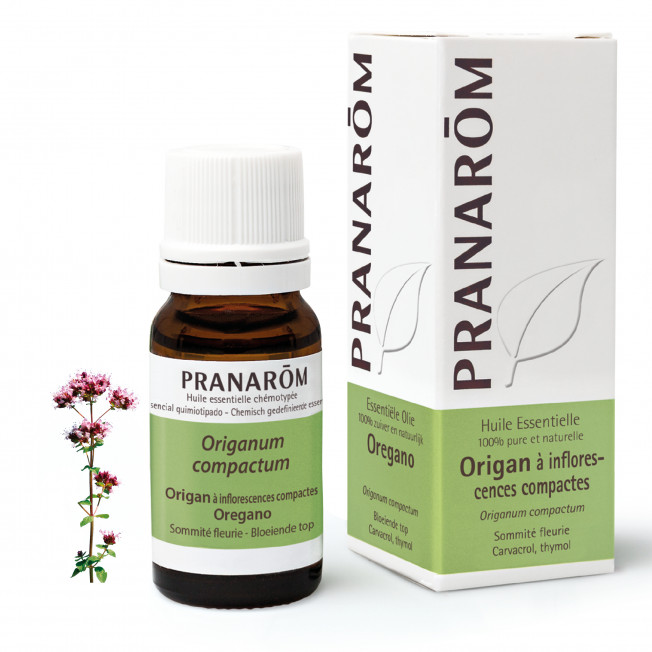




Morrocan oregano - 10 ml flowering top

This product interests you ?

Share
Origanum compactum
Native to North Africa, this aromatic plant thrives on thin soil on a sunny mountainous slope. Its dark green, spicy-tasting leaves are oval and pointed, and its flowers are found in compact, scented pinkish purple inflorescences.
Labels
  • Chemotyped essential oils
  • 100% natural origin ingredients
  • Recyclable packaging
Dosage
Ingest 1 drop on a neutral support twice a day. Maximum recommended daily dose for the oil: 2 drops - 80 mg. Do not exceed 7 days.
Advice
On a daily basis, there are oleoaromatic capsules containing this compact oregano essential oil. These are swallowed at the rate of one capsule morning and evening with a cold drink during the meal to prevent the difficult hygienic conditions encountered by backpack travelers, doctors without borders ...
Precautions
Seek advice from a healthcare practitioner • Keep out of reach of young children. • Does not replace a varied and balanced diet and a healthy lifestyle. • Do not exceed the recommended dose. • Do not use during pregnancy and breast-feeding and in children under 6 years old. • Keep away from any source of heat and light.
Reference

478

EAN

5420008504785

CNK

2733467

Nut/PL

PL175/62

Regulatory status

Dietary supplement

The other products of the field of application Urinary Tract

  • Thyme ct thymol - 10 ml

    Thymus vulgaris

    Urinary Tract

    "This perennial bush, can reach 30 cm in height. It has small spearlike leaves curled up at the edges. The stem is ligneous and the branches ascendant. The flowers are coloured rosy-white and grouped in a dense inflorescence. The vulgar thyme ct thymol is one of the 6 thyme chemotypes identified by Passet, Granger and Vernet and al. They are present in Southern France (especially in the Provence) o a limy soil."

    633
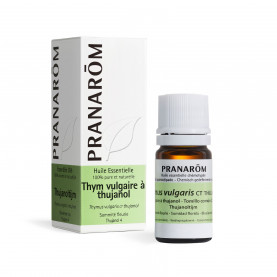
    Thymus vulgaris
  • Thyme ct thujanol - 5 ml

    Thymus vulgaris

    Urinary Tract

    "This is a small corky bush, which can reach 40 cm in height. It has small curved leafs, deep green coloured on the edge, which are hairy and twined. The chemical polymorphism of the vulgar thyme has been initiated by Granger and al. in 1963. Between 1971 and 1986, Granger and Vernet and al. identified 6 chemotypes of thyme. It concerns the geraniol, the a-teripeol, the thuyanol, the linalol, the carvacrol and the thymol."

    628
    Thymus vulgaris
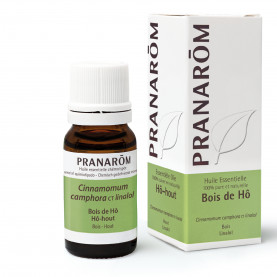
  • Ho wood - 10 ml

    Cinnamomum camphora

    Beauty Treatments

    The Hô wood is related to the Cinnamomum family, like Ravintsara for example. The full botanical name is also Cinnamomum camphora CT linalool which could lead to think that it is Ravintsara but it is of a very different chemotype. Ho Wood essential oil is obtained by distilling the bark of a Chinese tree, also called Shiu wood or Chinese laurel. Twin of the Rose wood; Ho Wood essential oil has excellent efficacy and good skin tolerance.

    5455

    Cinnamomum camphora